Beyond Fun: Core Life Skills Gained from Summer Camp
Summer camp is more than a seasonal pastime—it’s a launchpad for life skills kids carry into school, sports, and friendships. For families exploring summer camps in New York City, the benefits extend beyond fun: campers learn how to communicate, lead, solve problems, and bounce back from setbacks. In day-to-day activities, children practice social-emotional learning—the process of building self-awareness, emotion regulation, empathy, and interpersonal skills—within a safe, structured community. Research shows measurable gains in areas such as self-esteem, optimism, and readiness to contribute to their communities within weeks, not months, of attendance, according to a systematic review of camp outcomes. These are the reasons Kids in the Game designs programs that blend athletics, creative arts, STEAM, and movement—ensuring every child develops confidence, curiosity, and character through purposeful play.

Social Skills and Building Friendships
Camp is a social accelerator. Shared spaces, team challenges, and daily group routines create a sense of belonging while teaching empathy, communication, and compromise. While overnight programs use cabin life to build cooperation and respect for others, the same dynamics show up at day camps through shared equipment, rotating roles, and collaborative games. A Journal of Youth Development analysis of communal living found that assigned group responsibilities and shared quarters teach kids how to negotiate space, set norms, and support one another. In parallel, a systematic review of camp outcomes reported short-term increases in empathy, assertiveness, and optimism in less than two weeks.
Key social skills kids build:
- Empathy: noticing how others feel and responding with care
- Cooperation: working toward a shared goal and sharing resources
- Conflict resolution: listening, using “I” statements, and finding fair solutions
- Communication: clear speaking, active listening, and positive feedback
Friendship-building moments at Kids in the Game include:
- Buddy systems that pair new and returning campers
- Team challenges that require strategy-sharing and role rotation
- Group showcases where kids cheer on peers’ performances or projects
- Daily circles where campers celebrate “wins” and practice gratitude
- Lunch table mixers that help shy campers find their voice
For a sense of our culture and routines, visit the Kids in the Game summer camp FAQs.
Personal Growth, Confidence, and Emotional Well-Being
Camp is a safe place to take healthy risks—trying a new sport, speaking on stage, or coding a first robot—while receiving real-time feedback from caring mentors. An overview of how camps build growth and development underscores this protective structure: clear expectations, encouragement, and reflection help kids test limits without fear of failure. One national program report found that 92% of campers improved self-esteem following participation, and many carried those gains into school and extracurriculars. Resilience—simply, the capacity to recover from setbacks and stay motivated—grows as kids practice, stumble, and try again. Consistent with this, the systematic review of camp outcomes found notable improvements in self-esteem, optimism, and readiness to contribute to community.
How confidence sticks:
- Challenge → A new task stretches comfort zones
- Support by coaches → Mentors model, scaffold, and normalize mistakes
- Mastery → Small wins build competence
- Lasting confidence → Kids generalize success to school, sports, and friendships
Leadership, Teamwork, and Practical Life Skills
Camps intentionally assign roles, share chores, and run team activities, allowing kids to practice responsibility, organization, decision-making, and collaboration. Research suggests that assigned jobs teach conscientiousness and follow-through—habits foundational to leadership. Leadership, in this context, is the ability to guide, motivate, and support peers to achieve shared goals, and it grows through counselor-led opportunities and peer-led roles. Long-term camp outcomes also point to increased social competence and sustained extracurricular involvement among leadership program alumni.
Leadership and teamwork in action at Kids in the Game:
| Skill | What It Looks Like at Camp | Kids in the Game Example |
| Teamwork | Coordinating roles, giving/receiving feedback | Basketball small-sided games with rotating captains |
| Decision-making | Setting goals, choosing strategies under time | STEAM design sprints with limited materials |
| Organization & Responsibility | Managing gear, following routines | Equipment manager and line-leader roles |
| Conflict Resolution | Mediating disagreements respectfully | “Pause–Plan–Play” huddle protocol |
| Peer Leadership | Guiding younger campers, mentoring | Junior Coach pathway in sports modules |
Physical Health, Outdoor Activity, and Screen-Time Reduction
Physical literacy—the skills, confidence, and motivation to be active for life—grows when kids move daily and try diverse activities. Camps deliver movement-rich days: sports, swimming, dance, yoga, and outdoor games that build endurance, agility, coordination, and a genuine love of being active. Industry trends in summer camps show a deliberate push toward “unplugged” time and nature-based play to support mental health and attention restoration. Combined with structured outdoor challenges, many campers reduce weekly screen time naturally while picking up navigation, safety, and basic outdoor skills.
Creativity, Learning, and Skill Development
Summer camp serves as a lab for joyful, hands-on learning. Experiential projects teach perseverance and adaptability as kids tinker, revise, and complete their work, a dynamic highlighted in an overview of how camps build growth and development. Specialized programs can even shape future interests; program data on educational benefits of camp reports campers are roughly 40% more likely to pursue related careers or hobbies after focused STEM or arts experiences.
At Kids in the Game, variety fuels discovery:
- Creative Club: performing arts, improv, storytelling, set design
- Discover Club: coding fundamentals, robotics, digital music, makerspace builds
- Movement classes: dance, yoga, functional fitness, sport-specific skills
- Enrichment modules: journalism and podcasting, urban ecology, culinary basics, design thinking challenges
Community, Cultural Competence, and Civic Engagement
Cultural competence—the ability to understand, respect, and interact with people from diverse backgrounds—grows when kids share perspectives, collaborate across differences, and reflect together. Camps weave in service projects, community-building initiatives, and guided discussions to foster empathy and inclusion. Evidence from a systematic review of camp outcomes shows gains in social awareness and readiness to contribute to community, especially when programs elevate voice and responsibility.
How Kids in the Game models equity and inclusion:
- Culturally responsive activities reflecting NYC’s diversity
- Ongoing mentor training on belonging, bias, and restorative practices
- Mixed-age collaborations that promote perspective-taking
- Community showcases that uplift every camper’s strengths
See real stories in our overview on transforming youth through summer camp.
The Future of Summer Camps: Balancing Innovation with Tradition
The strongest camps pair evidence-based programming with joyful traditions—sing-alongs, team days, and project showcases—so kids feel both safe and challenged. As an overview of how camps build growth and development notes, clear structures, supportive coaching, and reflection drive skill transfer to home and school. For families, this means camp is both a restorative break from academic pressure and a powerful investment in social skills, independence, and well-being. Kids in the Game blends consistent mentorship with sports, arts, and progressive enrichment to prepare children for the next grade—and the next challenge.
What to look for in a great camp today:
- Trained, caring staff who model SEL and safety
- A healthy balance of movement, creativity, and quiet reflection
- Clear equity and inclusion practices
- Thoughtful tech use, with ample unplugged time
- Transparent communication with families and strong safety protocols
Explore more reasons to enroll with our guide to why summer camp is worth it.
Frequently Asked Questions
What social skills do kids develop at summer camp?
Campers develop teamwork, communication, empathy, and conflict resolution by collaborating on daily challenges and forming new friendships.
How does summer camp boost confidence and independence?
By trying new activities and solving age-appropriate problems with mentor support, kids build self-confidence and practice independence that carries into school and home.
What leadership skills are cultivated during camp?
Children learn to set goals, make group decisions, organize tasks, and mentor peers through rotating roles like team captain, gear lead, or junior coach.
In what ways do camps support emotional resilience and expression?
Arts, outdoor challenges, and team games provide kids safe ways to express feelings, handle setbacks, and practice coping strategies.
How does participation in camp promote physical literacy and outdoor skills?
Movement classes, sports, and outdoor play improve fitness, coordination, and confidence while naturally reducing screen time for many campers.
STEAM Activities to Try at Home
Introducing children to STEAM (Science, Technology, Engineering, Arts, and Mathematics) from an early age fosters critical thinking, creativity, and problem-solving skills. The best part? You don’t need fancy equipment or a professional lab to spark your child’s interest in these fields. With a few household items and a bit of imagination, parents and kids can embark on fun learning adventures right at home.
Here are a few simple STEAM activities that families can do together to inspire curiosity and creativity.
Build a Balloon-Powered Car
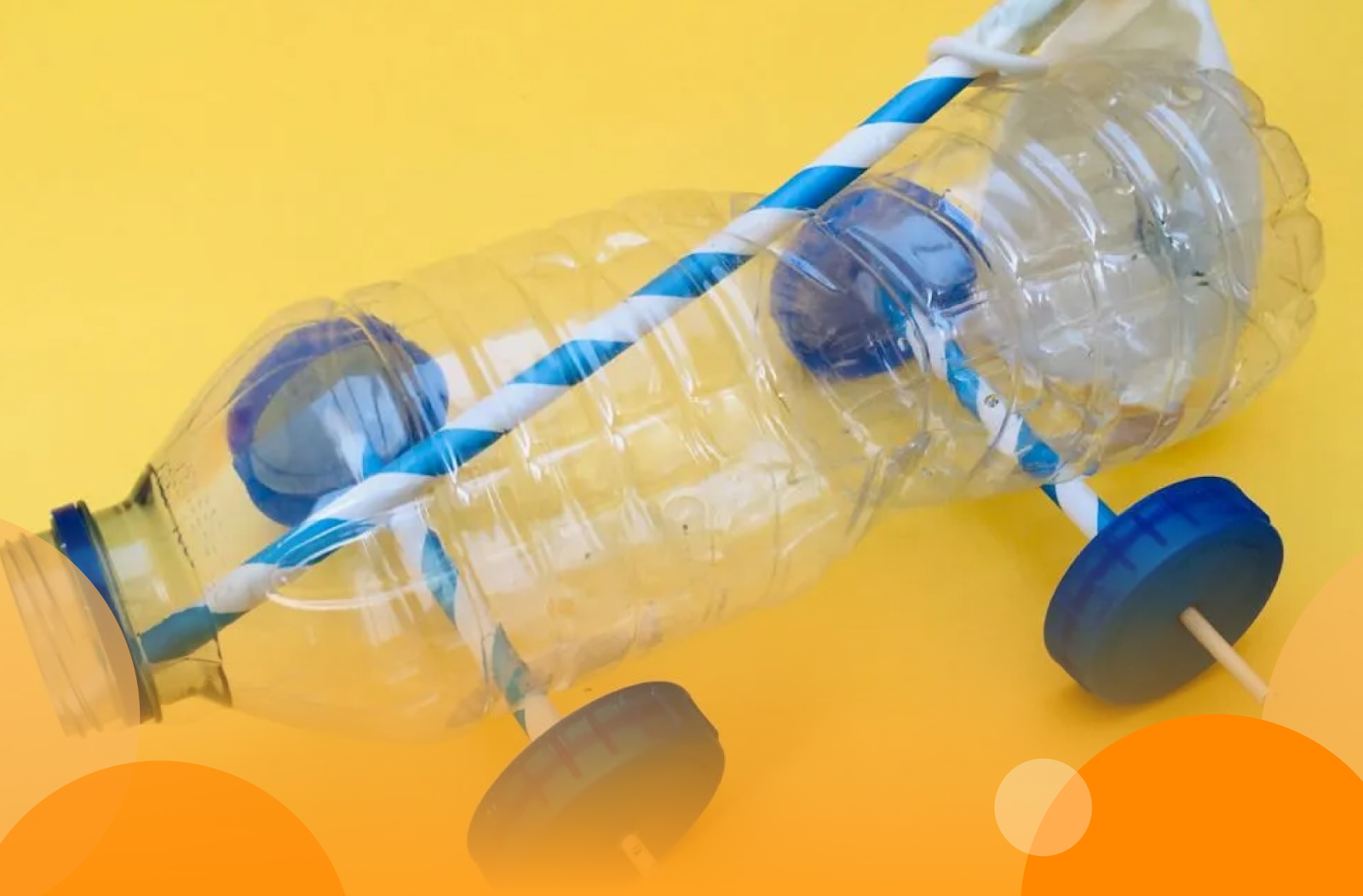
Turn recycling into a fun engineering project by designing and building a car powered by a balloon.
What You’ll Need:
- Small cardboard box (or plastic bottle)
- Four bottle caps (for wheels)
- Two straws (for axles)
- A balloon
- Tape
- Scissors
How It Works:
- Cut a rectangular piece from the cardboard box to make the base of the car or use the bottle.
- Attach the bottle caps to each end of the straws, then tape the straws to the underside of the car base to create your wheels and axles.
- Blow up the balloon, pinch the end, and tape it to the back of the car.
- Let go of the balloon, and watch the air propel the car forward!
What Kids Learn: This project introduces the basics of motion and force as kids learn how air from the balloon pushes the car forward.
DIY Lava Lamp
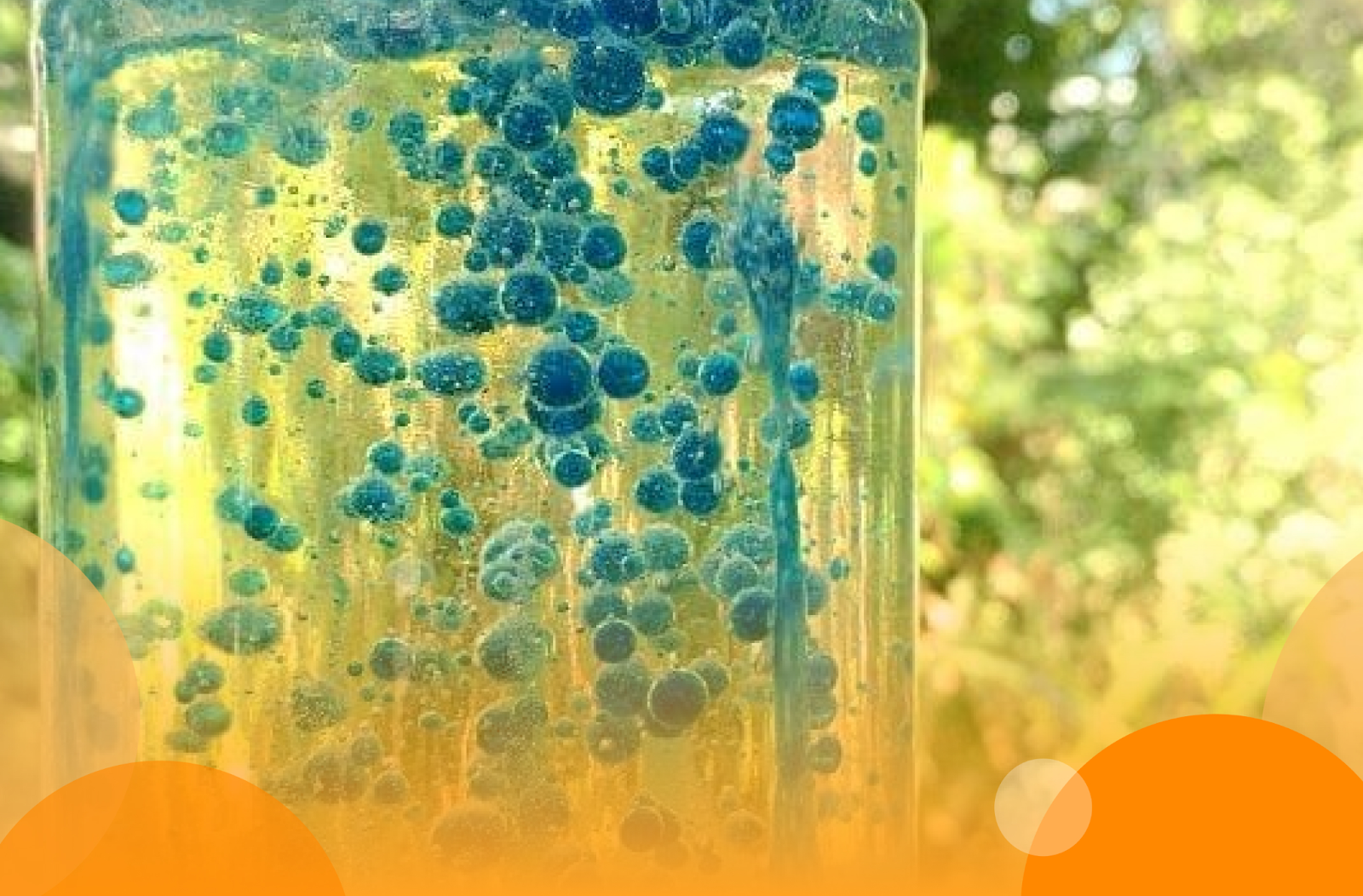
Bring a little bit of colorful chemistry into your home by creating a DIY lava lamp that combines art with science.
What You’ll Need:
- Clear bottle or jar
- Water
- Vegetable oil
- Food coloring
- Alka-Seltzer tablets
How It Works:
- Fill the bottle about two-thirds full with vegetable oil and the remaining third with water.
- Add several drops of food coloring.
- Break an Alka-Seltzer tablet into smaller pieces, then drop them into the bottle.
- Watch as bubbles rise and fall, creating a mesmerizing lava lamp effect!
What Kids Learn: This activity teaches kids about density (why oil floats on water) and chemical reactions (how the Alka-Seltzer creates gas bubbles).
Create an Art Bot
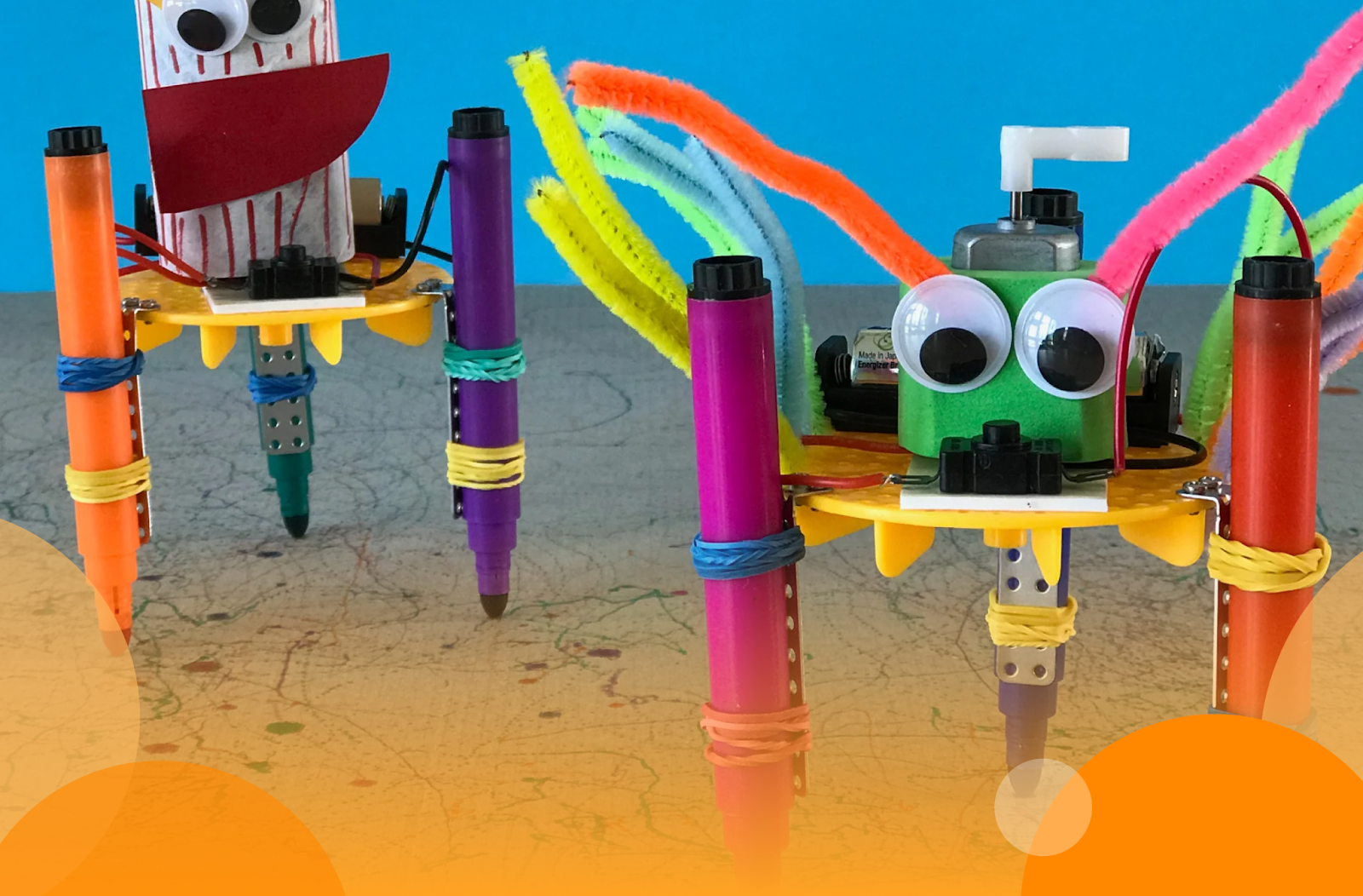
Introduce your child to robotics and creative expression by building a simple robot that can draw.
What You’ll Need:
- Plastic cup
- Markers
- Tape
- Motor (from an old toy or small fan)
- Battery pack
How It Works:
- Tape the markers around the rim of the plastic cup so they act as legs.
- Attach the motor to the top of the cup, and connect it to the battery pack.
- Turn on the motor, place the “Art Bot” on a piece of paper, and watch it create abstract drawings!
What Kids Learn: This project gives kids hands-on experience with basic engineering and robotics while allowing them to explore their artistic side.
Exploding Colors in Milk
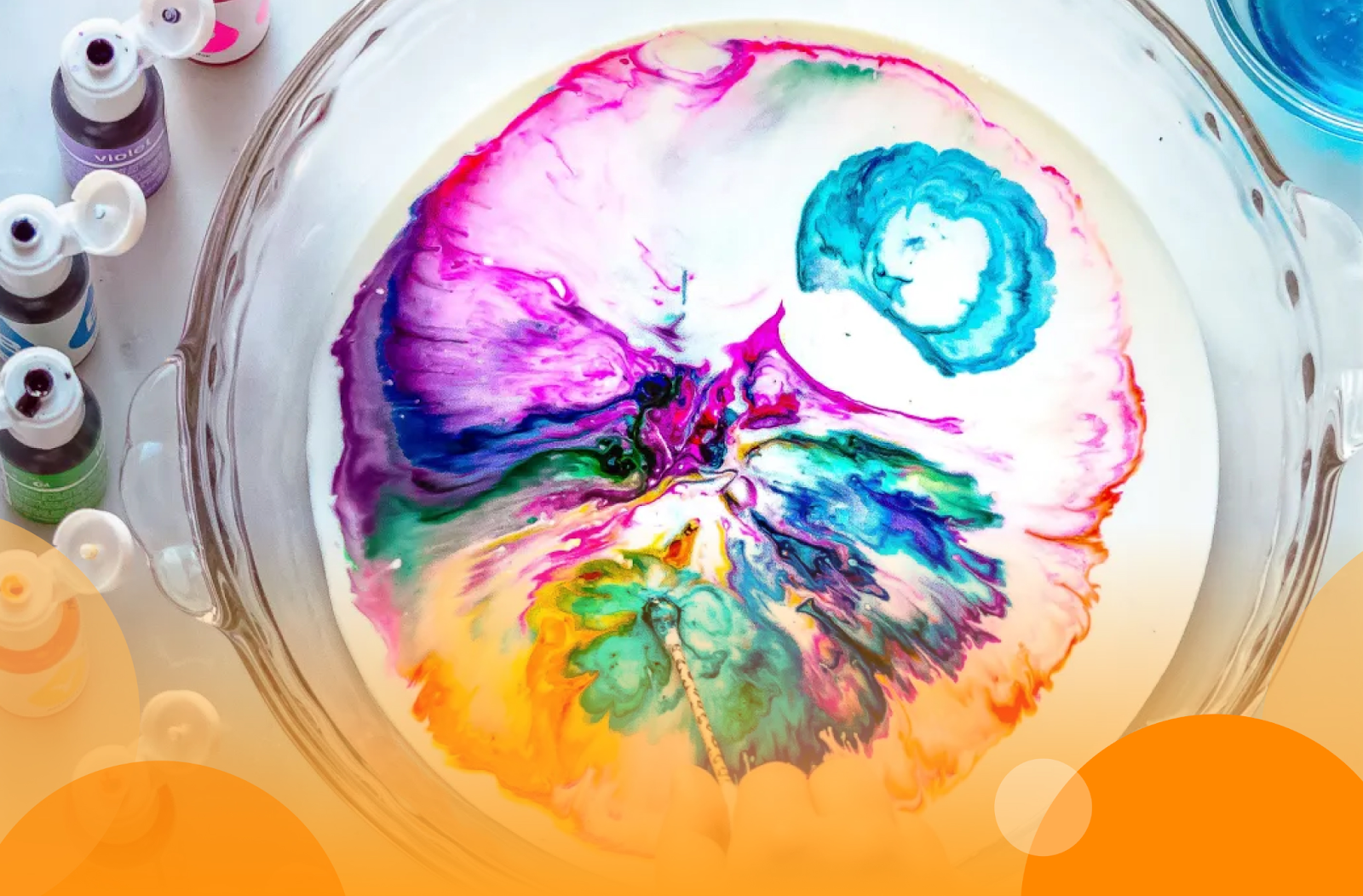
A colorful experiment that teaches kids about chemical reactions and surface tension.
What You’ll Need:
- Whole milk
- Shallow dish
- Food coloring
- Dish soap
- Cotton swabs
How It Works:
- Pour enough milk into the shallow dish to cover the bottom.
- Add a few drops of different colored food coloring to the milk.
- Dip a cotton swab into the dish soap and touch it to the surface of the milk. Watch the colors explode and swirl!
What Kids Learn: This activity teaches kids about surface tension and how soap breaks it, allowing the colors to spread.
Make a Rain Cloud in a Jar
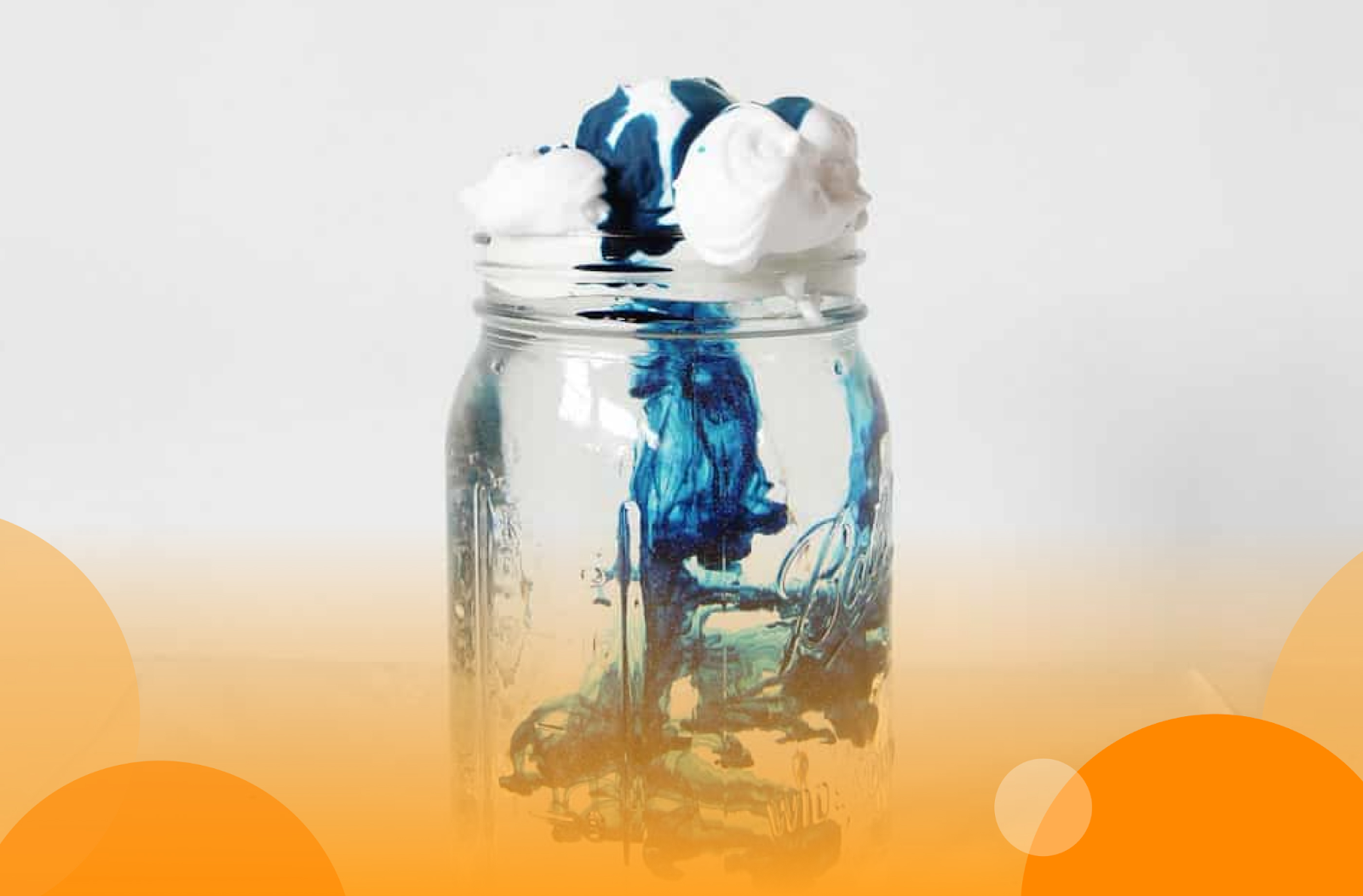
This weather experiment helps kids visualize how clouds hold water and why rain falls.
What You’ll Need:
- Clear jar
- Shaving cream
- Water
- Food coloring
How It Works:
- Fill the jar with water, leaving an inch of space at the top.
- Spray shaving cream on the surface to represent the cloud.
- Drop food coloring on top of the shaving cream, and watch as it sinks through the “cloud” and “rains” into the water below.
What Kids Learn: This activity explains how clouds form and release rain when they become too heavy.
Our after-school programs and summer camps are designed to incorporate hands-on STEAM experiences, allowing children to explore subjects like science, technology, engineering, arts, and mathematics in fun and engaging ways.
Join us to inspire the next generation of thinkers, creators, and innovators! https://www.kidsinthegame.com/
Spring, Green, Growing Up KING: Happy Earth Day 2017
Let’s talk green.
Take a look at a KING coach’s T-shirt, our website, our logo: we operate in blue and yellow. Blue for strength, stability and trust. Yellow for joy, energy and positivity. What is easily overlooked (by us too) is the result when we combine these colors. We get green. For KING, this means freshness, growth and life – three themes we are passionate about developing in the lives of our youth.
Holding our first annual Spring Break Camp this past week, our arts and STEAM projects were rooted in the theme: Growing Up KING in the Spring. We talked about the components needed to make life happen and growth happen, then brought those components into each day of programming:
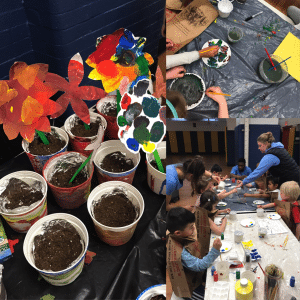
Monday saw us with seeds; we gave them a place to put down roots – a pot for a home – and we gave them food, or soil.
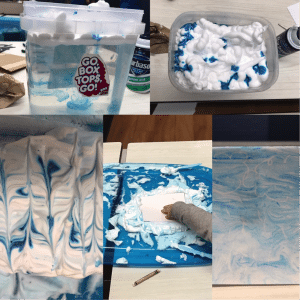
Tuesday we focused on water, demonstrating the way water collects in the clouds by making shaving cream and food coloring rain clouds, then reusing the ingredients from the project and some white crayons to make rainy cards.
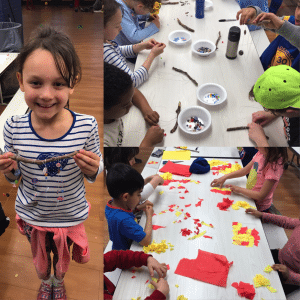
Wednesday was all about the sun. We made two forms of sun catchers to hang in our windows and help our plants grow with “extra light”.
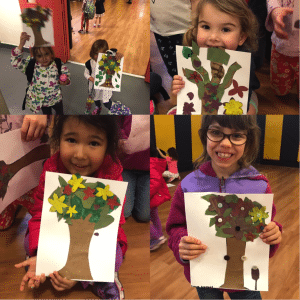
Thursday, we got to see what springs up when all of the components work together: life forming out of the ground and into something stable, strong and vibrant. We used recycled Trader Joe’s bags and painted on them (after mixing our own hues of green from blue and yellow), cut out tree shapes, cut out leaves and flowers, making a varied and beautiful forest of creativity.
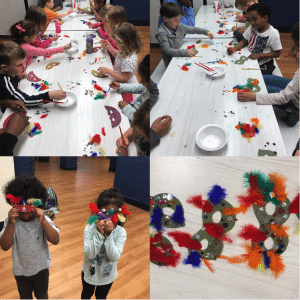
Finally, on Friday, we got to see how one strong and stable life can support the growth of other life; our strong trees are able to hold bird nests and provide baby birds a safe place to grow, and from which they can spread their wings and take flight.
All of these lessons about growth and life apply directly to our youth. As coaches, we’re committed to building ourselves and the kids we serve to reflect blue (stability and trust), yellow, (positivity and joy); and from these, seeing growth and life! More still, we – coaches and kids alike – strive to reflect strong, rooted trees that support and help spur one another to take off as leaders, dreamers and creators.
So as the week and our talks about seeing life came to a close, we asked some of our campers: What is your favorite thing about the Earth?
Here’s what we found…
Lena: The flowers, that’s what I love. Because they look pretty.
Simone: It makes trees. Because without the trees, the Earth would die because the car stinks and without the trees the Earth would stink.
Veronika: The grass. Because it’s green and it grows back and when it does it’s a shiny bright green.
Liam: Nature, because it grows and it turns beautiful.
Ryan: The sea, the Natural History Museum and the dinosaurs that are called fossils.
Graham: The ocean because we get to play in it and there are sea animals under it and I think that’s all.